Looking to Sell or Let?
Begin your journey with a free property valuation.
Get the facts and figures to make informed decisions.

Property Valuation
"*" indicates required fields

Mews are some of London’s prettiest streets, with narrow cobbled lanes and lovely pastel cottages. It is easy to forget you are in the middle of one of the world’s busiest cities.
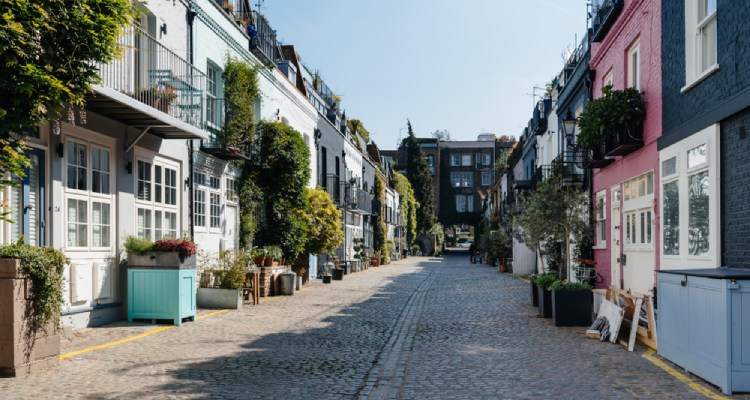
It is unsurprising then that mews-style houses are some of London’s most sought-after properties, but they come from unexpectedly humble beginnings. If you dream of owning a mews property in South Kensington, Chelsea or Mayfair, read our article to find out more.
| Mews Property Factfile | Details |
|---|---|
| What it is | A smaller-scale house in a long, low row on a private street or courtyard |
| Original purpose | Stables and coach houses with living space above, built behind grand townhouses in the 18th and 19th centuries |
| Converted to homes | Early 20th century |
| Typical tenure | Usually freehold, some leasehold |
| Typical size | Often 1,000 to 2,000 sq ft |
| Typical 2026 price | £1.5 million to around £3 million, with prime examples above £10 million |
| Higher-priced areas | Mayfair and Knightsbridge |
| More affordable areas | Maida Vale, with Elnathan Mews marketing at around £1.6 million to £1.8 million |
| Parking | Garage or off-street parking is relatively common |
| Outdoor space | Courtyard, terrace or roof terrace, and sometimes none |
| Planning | Often in conservation areas, with tight restrictions in Kensington and Chelsea |
| Main drawbacks | Small rooms, limited natural light and little outdoor space |
The definition of a mews house is a smaller-scale property in a long, low row, set on a private street or courtyard. Mews properties were built as stables and coach houses in the 18th and 19th centuries. Their original purpose was as a stable for horses and carriages, incorporated into the ground floor layout, with living space provided on the floor above. These stables and carriage houses were converted into mews homes in the early 20th century.
Usually found in cobbled lanes, these low-level stable blocks sat behind the more palatial residential townhouses to which they belonged. Despite their relatively humble origins, mews properties have become highly desirable dwellings. Though mews buildings can be found in other cities in the UK, they are generally associated with London.
The first London mews were built in the 13th century for royal falcons to shed their feathers. The word mew comes from the French word ‘mue’, meaning moult. Over the centuries, the Royal Mews at Charing Cross began to stable horses and house royal coaches, with living accommodation above the royal stables for the staff.
As London expanded in the Georgian era, people built grand terraces and townhouses, but space was needed to accommodate horses, coaches and servants away from the main home. So, they constructed mews in a row at the back of the property with access via a separate lane.
Most mews houses had stables and space to place a coach at the bottom with servants’ quarters above. Mews houses have no windows at the back to prevent servants from seeing into the garden of the main property.
Want to know more? Read about buying a new build home and what buyers and renters want.
Mews houses are relatively scarce in the London property market and they command higher than average prices. In the 2026 market, mews houses typically range from £1.5 million to around £3 million but can price at over £10 million. Properties with larger floor sizes and ones located in highly sought-after areas such as Mayfair sit at the upper end of the price range.
To give you a better idea of the local market prices across different areas and mews streets, here are some figures based on recent 2026 listings:
Buyers who are looking to purchase a high-value freehold property such as mews houses in London should budget for higher stamp duty rates.
The main appeal of mews properties is that they offer a central location while usually being tucked away in quiet streets. The demand for mews homes in prime central locations outstrips the supply, keeping prices above average for similar sized properties.
People built mews houses close to squares of townhouses in some of London’s most wealthy neighbourhoods, you will find mews houses in London’s most prized locations, including Knightsbridge. A central location means that mews properties exist near a wide range of amenities and attractions.
Aside from location, mews properties are situated on quieter streets, away from the faster pace of the world nearby. Their comparative seclusion adds to their charm, while the mews streets also boast attractive exteriors and period features, almost in the same tradition and style as a country ‘chocolate-box’ cottage.
Parking outside a mews property is not uncommon, and some of these properties have garages intact. In addition, a mews street often feels safe, private and secure, which will always appeal to buyers. If you like to have close neighbours and enjoy a sense of community in central London, mews properties are ideal.
There are many sought-after mews properties around London, many of which are hidden gems nestled away from the busy roads.
Mews homes exist in the boroughs of Kensington and Chelsea on streets such as Lexham Mews and Queens Gate Place Mews. Cranley Mews in South Kensington is one of the longest rows of mews properties.
In Mayfair, Adams Row sits behind Grosvenor Square and Balfour Mews is home to some larger than average mews properties. Ennismore Mews and Ennismore Gardens Mews in Kensington are always in demand by buyers seeking a prestigious location and a property with character.
Mews houses featured on TV and films include Holland Park Mews (The Crown and Slow Horses) and St Luke’s Mews in Notting Hill, which featured on Love Actually.
Kynance Mews, situated between Gloucester Road and Launceston Place, is another well-known row of mews, even more notable due to their pastel facades.
In Westminster, the cobbled road where Weymouth Mews nestles nestled between Weymouth Street and New Cavendish Street is easy to miss. As well as having early beginnings as stables and carriage accommodation before conversion work took place in the 19th century, Weymouth Mews was the location of an ambulance station during World War II.

Many mews houses are renovated sympathetically, introducing modern amenities without compromising their period features. A new build mews style house will typically follow the trademarks of a traditional mews property, set in a gated mews community.
These newer properties attempt to recreate the charm of a traditional mews property while avoiding the potential challenges of renovation and modernisation. Additionally, modern mews properties expand this quaint property style to new areas, which are likely cheaper than some of the mews properties situated in central London.
Developers have, by and large, improved the interiors of many mews properties, remodelling them to enlarge and reconfigure the space. The main downside of mews properties is that they can be small inside. However, they tend not to be listed, allowing developers and owners greater freedom to remodel the interiors. This could mean excavating the basement, adding a third level, extending into the roof space, or installing a roof terrace. Buyers and investors should check the local authority’s conservation area for any restrictions, which are common in Kensington and Chelsea. For example, adding external air-conditioning units might require planning permission.
Rooms inside a mews house are often small, unless the property is remodelled into an open-plan space. Many mews properties don’t have windows at the back or side, making the interiors dark. Modern lighting design will solve this problem, but lighting might still be a key consideration for anyone looking to buy a mews property.
Original features of a mews property to look out for include timber beams, sash windows and coach house doors.
‘Mews House’ and ‘Townhouse’ are sometimes used interchangeably as property descriptions, but original mews houses have distinct differences from townhouses:
| Feature | Mews house | Townhouse |
|---|---|---|
| Tenure | Usually freehold, but some leasehold | Usually freehold |
| Typical size | Often 1,000–2,000 sq ft | Often 2,500–5,000+ sq ft |
| Price per sq ft | Often lower than prime townhouses | Usually higher on prestigious streets |
| Outdoor space | Courtyard, terrace or roof terrace; sometimes none | More likely to have a private garden or terrace |
| Parking | Garage/off-street parking relatively common | Sometimes available, but not guaranteed |
| Privacy | High; own entrance and often quiet setting | High, although often on busier streets |
We adore mews streets, and the list of advantages if you are lucky enough to live in one is long. These are just some of the highlights:
Want to find out more? Explore things to know when getting a mortgage and how to buy a flat in London.
Mews living isn’t for everyone. In the interest of balance, here are some of the downsides to living in a London mews house.
Purchasing a mews house for investment purposes has several benefits, particularly due to the potential capital growth over time driven by scarcity and high buyer demand. The central location of mews houses also means that there is a high level of tenant demand from professionals working in the city and small families.
Affluent tenants are often attracted to living in mews houses, so high rental income is achievable either as a buy-to-let or renting out as a pied-à-terre for London professionals working in the city during the week and staying in their own home at the weekends.
The upfront cost is a consideration but the value protection due to the scarcity of these properties is one of the reasons many investors choose mews houses for long-term investment strategies.
If you are interested in purchasing a mews house in Mayfair, Knightsbridge, Notting Hill, Kensington or Chelsea, Plaza Estates can help. Contact us today to buy a mews property in central London, either to live in or as an investment.
If you’re purchasing a £3.5 million mews house as your only home, you’ll be due to pay £333,750 in Stamp Duty Land Tax. A buyer who already owns another residential property pays an extra 5% on every band, which lifts the bill to £508,750. Non-UK residents pay a further 2%.
Possibly, but planning rules shape what you can do. Most mews streets in the borough sit within conservation areas, and the Royal Borough applies strict policies to basement excavation. Check the property’s planning history, then seek pre-application advice from the council before you offer.
Often, yes. Many London mews lanes are private, so owners can share the cost of cobbles, lighting, gates and drainage through a residents’ association, a covenant or a managing agent. These contributions differ from leasehold service charges. Your solicitor should confirm who maintains the lane, what you pay each year and whether major works are planned.
Most purchases take around three to four months from accepted offer to completion. Cash buyers dealing with a chain-free seller can move faster. Mews houses often need extra checks on private road rights, party walls and planning history, so solicitors may need longer than for a standard flat. Ask your agent how quickly the seller wants to exchange before you offe
No. A mews address can cover a freehold house, a leasehold house or a flat inside a converted mews building. The freehold benefits that attract many buyers apply only to the first. Check the title for tenure, lease length and ground rent before you offer, and ask whether the layout has changed since the original conversion.
Begin your journey with a free property valuation.
Get the facts and figures to make informed decisions.
"*" indicates required fields
If you want to know more contact us,
and we’ll be happy to help you.
"*" indicates required fields


Buying a new build home comes with multiple benefits. It gives you access to the most energy efficient properties in London, presents an ...

Do you really need a home buyers survey for your central London property purchase? Home buyers surveys may not be legally required, but t...

Applying for a mortgage can be a complicated process and understanding how it works helps to speed up your purchase and can help you to f...


