Looking to Sell or Let?
Begin your journey with a free property valuation.
Get the facts and figures to make informed decisions.

Property Valuation
"*" indicates required fields

Are you thinking of buying a new home or selling your property in Central London? If so, you may well want to consider what taxes you are liable to pay. If you don’t check in advance, you might be landed with a nasty surprise when your finances take an annoying and unexpected hit further down the line.

To avoid this, it’s a great idea to get familiar with the basics so you can factor tax into your property sale or purchase.
For example, if you live in Marylebone or Mayfair, there’s a high chance you’ll have to pay inheritance tax on your property unless you know the tax rules and have a plan in place. After all, you don’t want to pass on your £3.2m estate (average price in Mayfair according to Rightmove), and be landed with a 40% inheritance tax! You may also need to pay capital gains tax when you sell a property that is not your primary residence, such as a buy-to-let property.
This article further explores the taxes involved in selling and buying a property in England.
You may be liable to pay three types of taxation when buying or selling property.
These taxes will be explored in turn through the rest of the article.
You will likely pay Capital Gains Tax (CGT) when selling a second or additional residential property. If you’re selling your main home, this won’t typically apply to you since you’ll be eligible for Private Residence Relief, eliminating CGT.
The amount of CGT you pay will depend on several factors explained below.
The first point to consider is that CGT isn’t paid on the whole sales value of a property – just the ‘capital gain’. In other words, you will only be taxed on the increase in the property’s value between the original purchase price and the price when selling the property. Also, the rates for CGT depend on your income tax band:
Want to know more? Sellers will also want to budget with our cost to sell a house guide and understand why your flat might not be selling.
To calculate your Capital Gains Tax when you sell a property, you can work out your total ‘gain’ by subtracting:
Remember! This does not include general maintenance and upkeep costs.
For example, when you sell a second property in Marylebone, where the average sale price over the last year was £1.7m according to Rightmove, an illustrative calculation would be:
Deduct costs of improvements spent on the property:
If your total ‘capital gain’ reaches beyond your annual allowance, you have to pay CGT on the excess. In theory, the amount of CGT owed can push you into a higher income tax band – so watch out for this. It’s important to add the capital gain to your taxable income to make sure you know how much you need to pay.
You must report and pay CGT on residential property within 60 days of the sale, and do so in a separate tax return (aside from any self-assessment). Fail to report it, and you’ll find yourself subject to a fine and interest payments.
Given the complexity of CGT, we recommend consulting a tax advisor to help you navigate the allowances, reliefs, and rates applicable to your specific situation. They can provide targeted advice to help manage your capital gains effectively.
CGT is not payable when a property is passed to a spouse or civil partner. If a property is transferred into a trust, this will usually defer the payment of capital gains tax until the trust sells the property. You may also be able to claim some capital gains tax relief if you lived in the property for a period of time.
Inheritance Tax (IHT) applies to the estate of someone who has died. The standard tax-free threshold (known as the ‘nil-rate band’) remains at £325,000. Estates valued below this threshold aren’t subject to IHT. It’s important to note that IHT applies to the value of the whole estate, not just property. That means you will have to consider the deceased persons assets as a whole when calculating IHT.
If the estate is valued above £325,000, IHT is charged 40% on the portion that goes beyond the threshold.
While 40% seems like a huge tax to pay, various exemptions/reliefs/tactics can (sometimes) prevent you from paying the whole amount.

No IHT is due when the estate is left to a spouse, civil partner, a charity, or a community amateur sports club, regardless of the estate’s value.
If you leave your home to your children, the basic threshold can increase to £500,000. This includes adopted, foster, or stepchildren, and is part of the residence nil-rate band.
This is a very significant benefit. Essentially, it applies when a person dies leaving all they own to their spouse – and their £325,000 allowance goes unused. However, the surviving partner can add this unused allowance to their own allowance, doubling the IHT threshold for their estate to £650,000 when they die. Ultimately, this means the surviving partner could leave up to £650,000 to their heirs before any IHT is due!
While the standard IHT rate is 40%, the government allows you to reduce this percentage by a small amount via charitable gifts.
Essentially, when 10% or more of the estate’s “net value” is left to charity in the will, the payable IHT is reduced to 36%. The ‘net value’ is the total value, but minus debts and the nil-rate band.
For example: say someone has an estate valued at £500,000 after debts/exemptions, and leaves £50,000 to charity (10%), the IHT rate on the remaining taxable estate can be reduced to 36%.
There are several other reliefs available, such as the Business Relief and the Agricultural Relief. If these apply to your specific situation, then you can likely reduce your IHT even further.
For detailed guidance on valuing an estate, you should refer to the UK government’s official resources on Inheritance Tax. The above information covers the basics, but there’s far more that a qualified financial advisor can tell you.
Stamp Duty Land Tax (SDLT) is the tax you pay when you buy a property. It’s colloquially known as ‘stamp duty’.
More specifically, Stamp Duty Land Tax is a one-off tax you need to pay when buying a property (or land) which costs more than a certain threshold. There are several tax rate bands for Stamp Duty, so the tax is calculated on the part of the property purchase price falling within each band. SDLT needs to be paid within 14 days of your property purchase completing.
Want to find out more? You may also find it useful to read what a conveyancer does and how to stage your home for sale.
When buying your primary residence, you are liable for SDLT for the proportion of your property above £125,000. If it’s under this amount, you pay no SDLT. The rate you pay for a higher value property is outlined below.
SDLT tax bands: Here’s a summary of the different tax bands for the current tax year, and the proportion you pay according to the price of your property:
Here’s a real example: if you buy a home worth £300,000, you will be charged a 2% tax on the portion of the property value between £125,001 and £250,000 and you would pay 5% on the portion between £250,001 and £925,000.
This equates to £5,000 in stamp duty tax. You can use the HMRC SDLT calculator to double-check.
It’s no secret that properties in prime central London fall into the highest bracket of tax, so you’ll need to be prepared to pay a considerable amount in SDLT.
To use the earlier example, buying a £3.2m home in Mayfair would mean you pay tax of £297,720 for stamp duty.
There’s good news for first-time buyers, who enjoy tax relief when buying their first property. They do not pay any SDLT unless their home costs more than £300,000.
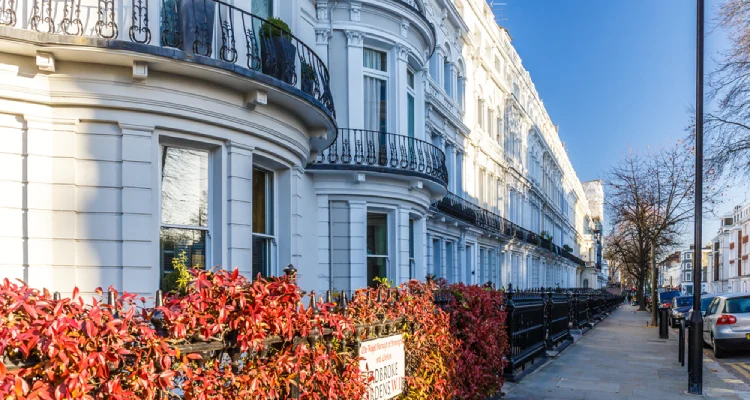
Here’s a real example: If a first-time buyer purchases a property for £500,000, they will not pay any SDLT on the first £300,000, and will pay tax of 5% on the remaining £200,000 = £10,000.
First-time buyer SDLT tax bands summarised:
Once again, if you’re lucky enough to purchase a home in Marylebone or Mayfair as your first home, you probably won’t be lucky enough to avoid the usual SDLT tax bands due to the high property price there. As usual, there are some exceptions to the SDLT tax bands, so it’s worth checking the government website to be sure. The HMRC Stamp Duty Calculator considers your personal situation to calculate the tax you’re due to pay.
Unfortunately, SDLT prices are 5% more expensive for those buying a second or additional property. Even if the home you buy is below the tax-free threshold, you will still have to pay a 5% stamp duty tax.
SDLT tax rates for second/additional property summarised:
At first glance, 5% surcharge does not seem a huge amount, but the examples below illustrate the increase in stamp duty you will pay on buying a second property.
If you’re a non-UK resident, then the rules about SDLT become even more complex. Essentially, buyers in this position must pay 2% more SDLT on their property purchase. However, this applies differently across different circumstances. Here’s a summary of how it works:
However, this is only scratching the surface. Non-resident buyers face more complex rules regarding property taxes, so it is well worth exploring the government guidelines in detail (and hiring a financial advisor). You can also read more in our article that covers Stamp Duty Land Tax in detail. And, if you want to calculate your property taxes, then try this online property calculator which covers the various bases of taxation and other expenses.
There are certain stamp duty reliefs such as right to buy properties, property investment funds and charities. You can find further information about the relief on the gov.uk website.
If you are buying or selling a property in central London areas like Primrose Hill, Swiss Cottage, Kilburn, Fitzrovia, Regent’s Park, St. John’s Wood, Maida Vale and Pimlico – our experienced estate agent team are on hand to help you will all aspects of the transaction. Get in touch today.
Begin your journey with a free property valuation.
Get the facts and figures to make informed decisions.
"*" indicates required fields
If you want to know more contact us,
and we’ll be happy to help you.
"*" indicates required fields


When you are selling a property in prime central London, there will often be more complications in the sales process due to the typically...

Most buyers choose a sole agency contract to sell – but can you use more than one estate agent to sell your central London house? Legally...

Accepting an offer from a cash buyer can be a good way to sell your house quickly – and avoid the chance of the property chain collapsing...


