Looking to Sell or Let?
Begin your journey with a free property valuation.
Get the facts and figures to make informed decisions.

Property Valuation
"*" indicates required fields

Rental yield offers a valuable overview of whether a property will likely be profitable. It should be a landlord’s primary concern when buying an investment property in Marble Arch, Chelsea, Hampstead, or other parts of central London.
But what exactly is rental yield, how do you calculate it, and what counts as a good investment? Here is a quick guide to help answer these questions and more.
Buy-to-let investors and landlords use rental yield to understand a property’s return on investment from a rental perspective. The money you make, or expect to make, from renting out your property is expressed as a percentage of the amount invested in buying the property.
Generally, a rental yield of over 5% is usually considered a good rental yield in London. The average rental yield in central London ranges from 4% to 6%, depending on the area, property type and property price. The higher-than-average property prices in central London can make it more difficult to achieve higher rental yields but compared to other investments, even a 3% rental yield can deliver a good return.
Properties in Battersea achieve an average rental yield of around 6%, whereas Kensington and Chelsea properties have an average rental yield of 3% – 4%, largely due to much higher property prices in the area.
Property investors also make money from capital growth or capital appreciation (increase in market value over time). Property prices can also go down, causing depreciation.
Investors looking to fund their retirement may focus on capital growth. Landlords looking to top up their existing income typically focus on rental yield.
Every landlord and investor has a different objective, but understanding rental yield and capital growth is essential when you buy a property and plan how long to hold onto it before selling.
When investors are looking for a property to purchase as a buy-to-let, understanding which factors will influence the rental yield will help to maximise the return on investment. These are the key factors that affect rental yields:
Want to know more? Discover the best buy-to-let areas in London and how to start a property portfolio.
Gross rental yield doesn’t account for outgoings. Net rental yield generates a more accurate estimate by considering your expenses too.
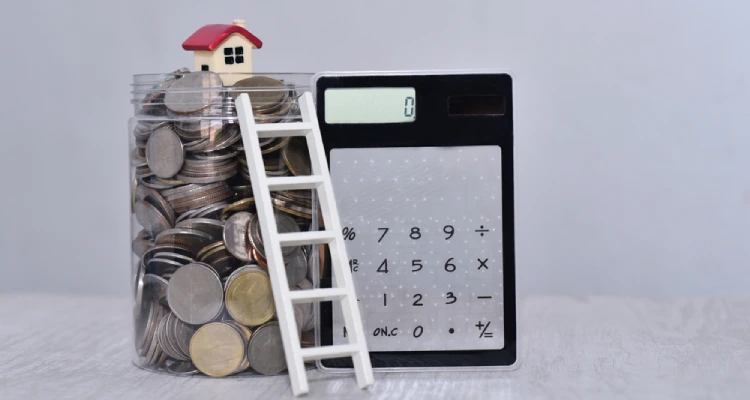
Rental yield formulas used in online calculators tend to be optimistic, so always use your own figures to make decisions. Here are the rental yield calculator formulas you need:
For gross rental yield calculations, work out your annual rental income by multiplying monthly rent income by 12, and dividing this by the property value. Finally, multiply this figure by 100 to get the yield percentage of the property.
How to calculate gross rental yield percentage – the formula:
yield = ((mrr x 12) / i ) x 100
To calculate the net rental yield, incorporate all your costs (such as landlord insurance and maintenance) into the formula.
The net rental yield formula is the most common. To calculate the net rental yield for a property, take the total rent received over a year and deduct your running costs. Divide this by the total amount invested in purchasing the property. Finally, multiply by 100 to work out the yield percentage.
The formula:
yield = ((mrr x 12 – rc) / i ) x 100
If you already rent out your property, you should have a good idea of the rent you can achieve. Otherwise, talk to a local estate agent or look at similar properties on Rightmove and Zoopla. Not every property earns the asking rent, so use conservative estimates.
Your property is unlikely to be occupied for 12 months every year, so stress-test your calculations using 10 and 11 months’ rent.

For the most accurate estimate of rental yield, include all your ongoing expenses, such as:
If you buy the property in cash, the investment amount is the purchase price and costs (stamp duty, survey, and solicitors fees). You should also add any costs of preparing the property to let, for instance:
Most landlords need a buy-to-let mortgage to purchase their investment property. In this case, the investment amount is the deposit you put down, your mortgage product, arrangement fees, and the costs outlined above.
Want to find out more? Read up on how to reduce capital gains tax on property and rental income tax.
A typical 1-bedroom apartment in Marble Arch has a rental value of £2,500 per calendar month, working out at an annual rental income of £30,000. The purchase price of this property is £400,000.
Purchase costs include £35,000 stamp duty and £2,000 for the survey and legal fees.
A general rule of thumb is to put aside 1% of the property’s value for repairs each year; this would be £4,000.
Purchased outright in cash, the rental yield on the above property would be:
(30,000 – 4,000) ÷ 487,000 x 100 = 5.34%
Let’s assume the investor takes out an interest-only buy-to-let mortgage for 80% of the purchase cost (£320,000) with a 4.5% interest rate (over 10 years). That would result in monthly payments of £1,199 or £14,388 annually.
To calculate the investment amount, take the deposit (£80,000) and add that figure to the buying costs (£37,000). This gives a total of £117,000.
(30,000 – 14,388 – 4,000) ÷ 117,000 x 100 = 9.9%
These figures are for illustration only. Every buy-to-let investment will deliver a different yield depending on the cost of the property and the rent charged.
A good rental yield is subjective, depending on your investment strategy, goals, and average rental yields in your area. The higher the percentage rental yield, the better. Most investors regard a 5% or more rental yield as a good return on your rental property. Even the 2.86% yield in the above example can be higher than the interest on a savings account.
Try maximising your rental yield by reducing expenses, changing the rent amount, or reconsidering how you rent. Finding long-term, affordable tradespeople for maintenance can help to reduce expenses. Ensuring that you are aware of all the allowable deductibles can also reduce outgoings to maximise your gross yield.
You might need to adjust your property investment strategy if your buy-to-let isn’t performing well. Short-term lets, student accommodation and houses in multiple occupation (HMOs) can be profitable.
If your property has the potential to be an HMO, you could potentially receive 5 or more rental incomes rather than one if you rent to a family. Renting out an HMO would also minimise the impact of void periods, as when one tenant moves out you could potentially still have four or more other tenants paying rent.
However, they come with their own regulations and outgoings, so don’t take the decision lightly.
If you buy a property close to a university, turning it into student accommodation could be more profitable than renting it out as a family home. Again, you would have multiple rent payments and students typically sign a yearly agreement for the academic year, often arranging their accommodation months in advance. The expectations on the condition of the property can be lower than it would be for high-earning professionals, meaning costly upgrades are less likely.
Should you be considering letting your property, we would be pleased to advise you on a current market appraisal and answer any queries you may have about letting property. Contact us today.
Begin your journey with a free property valuation.
Get the facts and figures to make informed decisions.
"*" indicates required fields
If you want to know more contact us,
and we’ll be happy to help you.
"*" indicates required fields


If you are a landlord with Central London property and want to keep up to date with your latest health and safety responsibilities, this ...

When it comes to tenants, central London is still calling. The demand for rental property of all types is very much present but how buy-t...

Energy Performance Certificates are a legal requirement when selling or renting out a property. The government introduced this to ensure ...


