Looking to Sell or Let?
Begin your journey with a free property valuation.
Get the facts and figures to make informed decisions.

Property Valuation
"*" indicates required fields

As a landlord, you have a clear legal duty to protect your tenants from the risks of fire and carbon monoxide poisoning – both of which can have devastating consequences. Smoke alarms and carbon monoxide detectors are an essential part of this protection, which is what we explore in the article below.
As a landlord, installing smoke alarms and carbon monoxide detectors is one of the simplest things you can do to save lives – plus the law insists you protect your rental property with them.
It’s important to understand the current smoke alarm and carbon monoxide detector regulations for landlords. However, fire regulations for rental properties can change at any time, and ignorance is no excuse in law! Keep on top of any changes by regularly checking the gov.uk and London Fire Brigade websites, as well as that of your local council – for any regulations specific to privately-rented housing in your borough.
If you let a property in areas like Belgravia, Fulham, Hyde Park and Marylebone, it’s a good idea to brush up on the latest regulations to remain compliant.
Single households have relatively simple rules regarding smoke and CO alarms. These alarms will alert occupants by a loud sound in the instance of fire and smoke. Equally, special versions of the alarm can alert by vibration or flashing lights for those with hearing impairments. Take a look below for landlord responsibilities regarding smoke and carbon monoxide alarms.
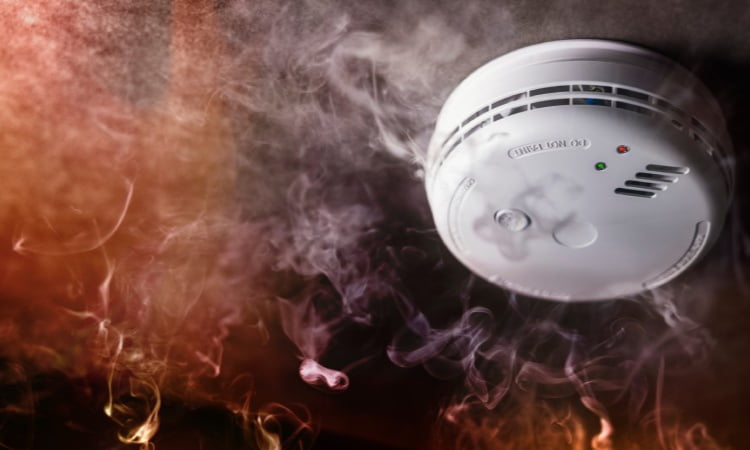
The essential rules – In England, private landlords must install at least one smoke alarm on every storey of a rental property that contains a room used as wholly or partly living accommodation. This includes kitchens, bathrooms, and hallways. It’s essential to note that the term “living accommodation” covers any space where a person might reasonably spend time, not just bedrooms or living rooms.
Ensuring the best alarm coverage – While the legal requirement is to have one alarm per storey, best practice suggests installing additional alarms, especially in high-risk areas like kitchens and near sleeping areas, to provide enhanced protection. Installing more alarms increases the likelihood that tenants will have enough time to escape safely in the event of a fire. For optimal coverage, landlords should consider interlinked alarms, which alert tenants throughout the property if they detect a fire in any one area.
Landlord responsibilities – Under the regulations, landlords must ensure all alarms are in full working order at the start of every new tenancy. This means conducting a functional test to verify each alarm is operational. It’s not sufficient to rely on visual inspection alone.
Once the tenancy begins, landlords are no longer responsible for testing or maintaining the alarms on a day-to-day basis; tenants must check the alarms monthly and replace batteries as needed, reporting to the landlord if there any any faults. Once the landlord is told of the fault, they are obligated to replace the alarm to comply with the rules.
Want to know more? Read about what an Energy Performance Certificate is and how to improve your EPC rating.
You must install carbon monoxide detectors in all rooms that feature a solid fuel-burning appliance – such as a log or coal fire or wood burning stove, stipulate the smoke and carbon monoxide alarm amendment regulations 2022. If your property has a gas appliance, you should generally consider the installation of CO alarms.
Even if your property doesn’t have a solid fuel or gas appliance, carbon monoxide detectors are still advisable, particularly if the property is a flat in a larger building, where you have no control over the other units.

Here’s a handy summary of the landlord rules for CO alarm safety:
The fire safety regulations are more stringent for HMOs. This is because research has shown that the risks are higher when unrelated people live together. HMO fire regulations vary from one local authority to another – so it’s essential you check the rules in your area.
At the very minimum, an HMO of one or two storeys will require an appropriate mains-powered, interconnected smoke alarm system plus an additional interlinked heat alarm, fitted with integral battery back-up and located in the kitchen. HMOs of three or more storeys should be fitted with a mains-powered system with a central panel and a heat alarm in the kitchen.
Here’s a handy list of landlord responsibilities for smoke and CO detectors in HMO property:
For HMOs of one or two storeys:
For HMOs of three or more storeys:
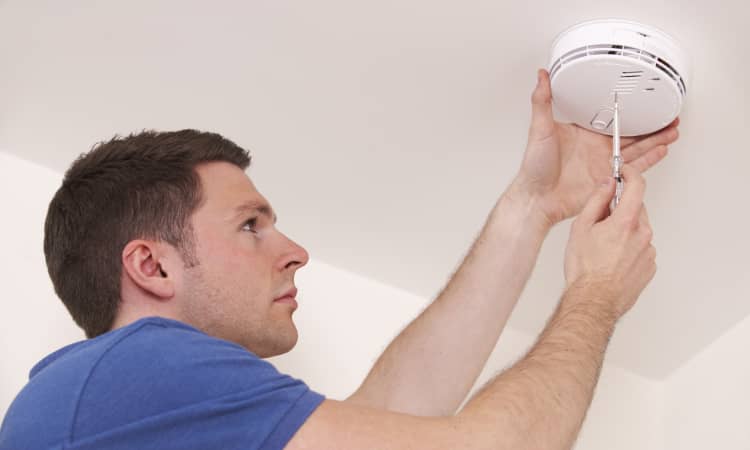
As of October 1, 2022, carbon monoxide alarms have needed to be installed in every room containing a fuel-burning appliance (except rooms used solely for cooking). This includes:
A fire risk assessment must also be carried out in the communal parts of HMOs. If you do not feel qualified to perform this assessment yourself, engage a professional. Fire safety is such an important issue that nothing should be left to chance.
The fire safety regulations for Houses in Multiple Occupation (HMOs) are more stringent than for standard rental properties due to the higher risks associated with unrelated people living together. This is particularly the case for high rise buildings, since the Grenfell fire tragedy. HMO fire regulations can vary between local authorities, so it’s crucial for landlords to check the specific rules in their area.
Want to find out more? Take a look at the Renters’ Rights Act 2025 and flexible tenancies.
The regulations do not stipulate the type of alarm you should fit (i.e. hard wired or battery powered). You should make an informed decision and choose the best alarm for your property and tenants.
Networked mains-operated alarms save lives as one alarm triggers the rest, so every occupant is alerted – so these are the safest option for landlords to choose.
At least one smoke alarm should be installed on every storey and a carbon monoxide alarm in every room containing a solid fuel burning appliance.
The regulations require landlords to ensure all alarms are in working order at the start of each new tenancy. After that, tenants should take responsibility for their own safety and test all alarms regularly. It is recommended that smoke and carbon monoxide alarms are tested monthly.
If tenants find their alarms are not working during the tenancy, they should either replace the batteries themselves or notify the landlord.
To test a carbon monoxide (CO) alarm, press and hold the “Test” button on the unit, which should trigger a loud beeping sound if it’s working correctly. You should also check the indicator lights—typically a green light for power and a red light for an alarm. Make sure to test CO alarms monthly and replace batteries annually or when the alarm chirps to indicate low battery. Always refer to the manufacturer’s instructions for specific guidance.
Landlords should also check the expiration date on CO alarms. If an alarm fails any of the tests or is past its expiration, it must be replaced. For extra safety, landlords can hire professionals to test the sensor’s ability to detect carbon monoxide using a CO test kit.
Carbon monoxide (CO) alarms typically last between 5 to 10 years, depending on the model and manufacturer. The lifespan of the alarm is usually indicated by an expiration or manufacture date printed on the back of the device. After this period, the sensors in the alarm degrade and may no longer accurately detect carbon monoxide, even if the device appears to be functioning properly. It’s essential to replace the alarm once it reaches the end of its lifespan to ensure continued protection against CO hazards.
Check the alarms as part of your inventory and asks the tenant to sign and confirm that the alarms have been tested and that they are happy everything is in working order.
If you wish to check the alarms, you should give your tenant 24 hours’ written notice. Your tenant does not have to give you access to check the alarms. While you must check that the smoke alarms are working correctly at the start of your tenancy, you are not required to test or replace the batteries during the tenancy. However, if you wish to check the alarms, and the tenant refuses access, protect yourself by keep a record of your correspondence.
Your local authority is responsible for enforcing smoke alarm and carbon monoxide detector regulations. If you fail to comply, it will usually issue a remedial notice requiring you to fit your alarms within 28 days. If you still don’t comply, the local authority can arrange for alarms to be fitted and fine you up to £5,000.
Yes, all rented properties need to follow the smoke alarm and carbon monoxide detector regulations – if your property doesn’t, you should put this right as soon as possible.
If you’re still confused about smoke alarm and carbon monoxide detector regulations – or any other aspect of renting out property – speak to us today about our services for landlords in central London.
Begin your journey with a free property valuation.
Get the facts and figures to make informed decisions.
"*" indicates required fields
If you want to know more contact us,
and we’ll be happy to help you.
"*" indicates required fields


If you are a landlord with Central London property and want to keep up to date with your latest health and safety responsibilities, this ...

When it comes to tenants, central London is still calling. The demand for rental property of all types is very much present but how buy-t...

Energy Performance Certificates are a legal requirement when selling or renting out a property. The government introduced this to ensure ...


