Looking to Sell or Let?
Begin your journey with a free property valuation.
Get the facts and figures to make informed decisions.

Property Valuation
"*" indicates required fields

You will likely need a second mortgage if you currently have a mortgage on your home but want to buy another property.
The types of available mortgage options can vary, depending on your plans for the property. For example, if you are thinking of buying a property in Fulham or Battersea to rent out to tenants, you would require a buy-to-let mortgage. If you are buying a central London property as a holiday home for yourself, or for your child to live in, the mortgage requirements would be different.
Read on for everything you need to know on second property mortgages.
A second home mortgage is a mortgage for buying a second residential property. Two mortgages run simultaneously, each secured on a different property. A second home mortgage is not to be confused with re-mortgaging or a second charge mortgage (more on these later).
A second house mortgage could be for several types of property purchase, such as:
The type of property purchase will determine the type of mortgage required.
The type of mortgage you will need will depend on which of the following scenarios is applicable:
If you buy a second home you will be living in yourself, you will require a residential mortgage. This type of mortgage will restrict you from renting out the property, as the mortgage is intended to be used for purchasing a second home or holiday home. If you are considering renting the property, you must take out a buy-to-let mortgage.
If you are buying a second home to rent out as a holiday home or for a tenant to live in, you will require a buy-to-let or a specialised holiday-let mortgage.

The interest rates for buy-to-let mortgages are usually higher than residential mortgage interest rates. Most landlords choose to take out an interest-only mortgage, which enables them to make more monthly income. However, this means they will not own the property at the end of the mortgage term and will need a plan to pay off the balance.
It is important to ensure you have the right home insurance to cover the property for its use. Your mortgage provider will usually require a home insurance policy for the buildings as a condition of the mortgage. You will need to take out specialist home insurance to cover a holiday let or a landlord insurance policy if you let the property to tenants.
Want to find out more? Check out our stamp duty guide and questions to ask when buying a leasehold flat.
If you meet the eligibility criteria, you will be approved for a residential or buy-to-let mortgage for a second home.
Even if you already have an existing mortgage, you may still be able to get another residential mortgage. However, you will need to provide evidence to your lender of why you require more than one residential property to live in (i.e. for work purposes if you work away from home) and also make clear which property will be your main residence.
You need to provide this evidence because residential mortgages are generally cheaper than buy-to-let mortgages, so your lender will need to be satisfied that you are not using a residential mortgage for a property you are planning to rent out.
If you are buying the property as an investment to rent out, the buy-to-let mortgage provider will want to check that the rental income you should be able to achieve will be around 125 – 145% of the loan repayments. Residential mortgage providers will also want to be sure that you will be able to afford both mortgages at the same time.
Each provider will have different requirements you must satisfy before they lend to you, so it’s important to shop around before you buy a second home.
The amount of deposit you will need will largely depend on the purpose of your second property. Buy-to-let and holiday-let mortgages will usually require a larger deposit than residential mortgages.
Buy-to-let mortgage providers usually require at least 25% deposit, while a holiday-let mortgage generally requires 30% or more. This is because the lender takes on more risk than with a standard mortgage or buy-to-let mortgages where the tenants stay longer term.
If your second mortgage is for a holiday home that only you will use, you may only need a 15-20% deposit.
Whatever the purpose of your second property, you will access better rates if you have a deposit of 40% or more. A larger deposit will usually give you access to better mortgage deals. Comparing mortgages on a comparison site will show you the difference in interest rates depending on the loan-to-value.
Second-home mortgages tend to have higher interest rates than standard residential mortgages. Currently, mortgage rates can vary between 4% and 8% depending on the size of your deposit.

Interest rates on an interest-only mortgage can be either fixed rate or variable. Fixed-rate mortgages tend to be higher than variable, giving you the certainty of how much you will pay over the fixed rate term.
In 2023, mortgage rates reached the highest rates seen in 17 years, but the Bank of England base rate has been reduced multiple times since then. Rates have been falling, and better deals are available compared to the previous two years. There are lots of different deals on the market now, so you should compare mortgages and find the best deals available.
If you are buying a second home, you will not be eligible for any first-time buyer mortgage deals or first-time buyer schemes. For example, Lifetime ISAs (Individual Savings Accounts) are only available for first homes.
Buy-to-let mortgages are currently available for around 4% to 6% based on a 5-year fixed rate, interest only mortgage over 25 years with a 25% deposit.
Some of the best mortgage deals on the market for this criteria include:
These mortgage rates were available on 11 June 2025 and the rates change regularly. Any future changes to the Bank of England base rate could increase or reduce the available rates, so you should compare the latest rates to find the best deals. Also, if you have a larger deposit, you will usually be able to access better deals with lower interest rates.
You will go through the same affordability checks as with your first mortgage, but lenders will be more cautious as you must pay two monthly mortgages. Lenders will usually calculate your affordability by assessing your income and expenditure, including any personal loans or credit cards you have.
If your second mortgage is for a buy-to-let property, lenders must be convinced that the profit from your rental property will cover at least 125% or even 145% of the mortgage payments before they consider offering you a loan.
Want to know more? You might also want to read buying a new build home and find out whether you need a home buyer’s survey.
The history of mortgage repayments on your existing mortgage will form part of your assessment. A flawless payment record will indicate that you have a good credit score and are a financially stable applicant.
The mortgage broker will also look at the loan to value on your current mortgage to assess your overall liability. If you are in negative equity, you will find it difficult to get a second mortgage.
Using a mortgage calculator will help you understand how much you can borrow for a second home and determine the type of mortgage you require. There are lots of online mortgage calculators that you can use to check whether you meet the required criteria, as well as to find out how much you can borrow.
Due to the higher risk of lending money to purchase a second home, the mortgage lending criteria are stricter. However, there are some actions you may be able to take that will boost your chance of getting a second home mortgage:

Lenders usually have stricter criteria for accepting a mortgage application for a second home compared to a standard mortgage as there is more risk of missed payments. The following criteria is usually applied:
If you are buying a second property to rent out, lenders may require an expected rental income of at least 125% of the monthly interest payments.
Another difference between the requirements for second home mortgages and standard mortgages is that the lender may require a bigger deposit. While standard mortgages typically require a deposit of 5% or 10%, BTL deposits tend to be higher at around 25% to 40% and a minimum of 20% for holiday homes.
The lender may have stricter affordability tests to check that you would be able to afford repayments on your mortgages for both properties. There may also be a minimum salary/income requirement.
It may be more difficult to get approved for a second home mortgage if there are any credit history issues, such as missed payments or a large amount of debt.
If you cannot secure a second mortgage, there are still options for buying a second home if you have equity in your current home:
You might be able to re-mortgage to release equity from your existing property, which can be used as a deposit for your second mortgage. You may also get a better deal, which will help with your monthly affordability tests on your second mortgage.
A second charge mortgage, also known as a secured loan, allows you to borrow money using your existing home as security. You effectively end up with two mortgages on the same property. This can be useful if you want to release the maximum equity possible, either for a larger deposit or to buy a second property outright.
A bridging loan is a short-term loan, where funds can be raised quickly, and the amount you can borrow is based on your available equity.
Bridging loans are usually used when traditional mortgages are unsuitable. For example, if you are buying a property at auction and need the funds quickly or to bridge the gap if you have your heart set on a specific property but are struggling to sell your property to raise funds.
Bridging loans are secured against the property and can be repaid once the property has been sold or you have been able to secure funds through the traditional mortgage route.
A development loan would be suitable for those who buy an investment property that requires a complete renovation before selling it for a profit. You will need to produce a development plan and show this to your lender, and if accepted, they will give you the loan in stages throughout the development process. You will be expected to have at least 30% of the funds required for the renovation, and the loan term is usually between 12 and 18 months.

If your new property will become your primary residence, make sure that you inform HMRC. If you come to sell the property later, you must pay capital gains tax if it is not your main home.
If you are buying a second home, you will have to pay an additional 3% Stamp Duty Land Tax (SDLT) on top of the standard rate based on the property’s price. When calculating how much income you will make from a property investment, you will have to consider the stamp duty.
For example, if you buy a second home valued at £500,000, you would need to pay the stamp duty of 5%, plus the 3% surcharge for second homes. This would amount to a total stamp duty of £40,000.
Use the SDLT calculator to work out how much stamp duty you will be liable to pay.
If you are considering buying a second property in central London areas including Chelsea, Hampstead and Hyde Park, we can help. We have a large selection of stunning properties within easy access to London’s shops and nightlife, perfect as a pied-à-terre or buy-to-let investment. Get in touch with our sales team today.
Begin your journey with a free property valuation.
Get the facts and figures to make informed decisions.
"*" indicates required fields
If you want to know more contact us,
and we’ll be happy to help you.
"*" indicates required fields

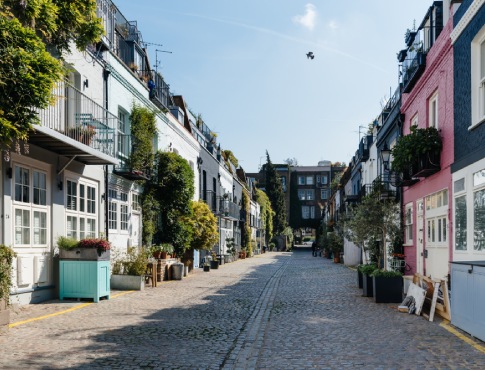
Mews houses are unique and scarce properties, offering a central location, property character and a quiet setting, despite the proximity ...

Buying a new build home comes with multiple benefits. It gives you access to the most energy efficient properties in London, presents an ...

Do you really need a home buyers survey for your central London property purchase? Home buyers surveys may not be legally required, but t...


