Looking to Sell or Let?
Begin your journey with a free property valuation.
Get the facts and figures to make informed decisions.

Property Valuation
"*" indicates required fields

Regent’s Park is one of the most sought after areas of Central London but there are distinct benefits of buying a property on one street within Regent’s Park compared to one just a few minutes’ walk away.
The variation in prices can be substantial and the property types range from a flat on the south-facing Nash terrace overlooking the park to a conversion on a secondary road two streets back, which offer very different propositions, despite both being classed as the Regents’ Park area.
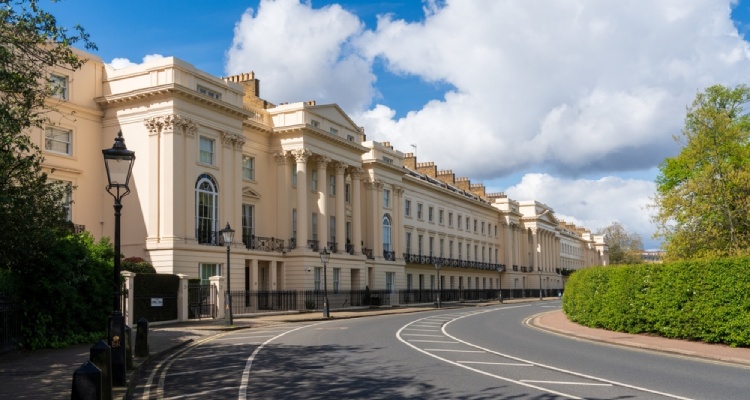
The park’s perimeter stretches across NW1 and W1, touching Westminster and Camden, and the streets that surround it offer different types of appeal. Therefore, choosing the right street in this part of London involves more consideration than buying in other areas. This guide provides localised details and insights that buyers often overlook during their property search.
The area divides into recognisable pockets: the Crown Estate terraces along the Outer Circle, the residential streets of the Regent’s Park Estate to the north, the mansion flat territory around Clarence Gate and Baker Street to the south, and the quieter roads of Park Village East and West at the park’s north-eastern edge. Each has its own character, its own buyer profile, and its own price ceiling.
The highest prices in the Regent’s Park area attach to the Grade I listed Nash terraces that line the Outer Circle. These are Crown Estate properties, designed by John Nash in the 1810s and 1820s, and their listed status, park-facing aspect, and architectural grandeur place them in a category of their own.
Chester Terrace, Cambridge Terrace, and Cumberland Terrace are the most prominent. Cumberland Terrace, with its elaborate Ionic colonnade and pediment, is the most architecturally dramatic of the group and commands prices that reflect it. Cornwall Terrace, at the southern edge near Marylebone Road, has attracted significant interest from international buyers given its scale and proximity to the West End.
Park prices at this level are rarely conveyed easily by Land Registry street-level data, given the low transaction volumes and the bespoke nature of each lease or freehold arrangement. The Crown Estate manages the freehold of the Nash terrace properties, and buyers should take specific advice on lease terms before proceeding.
Beyond the terraces, the following streets consistently achieve the highest prices in the surrounding residential area:
For buyers focused on houses rather than lateral flats within terrace conversions, Park Village East and West offer family houses directly adjacent to the park. These villas, many of them semi-detached Regency and early Victorian in character, are genuinely rare in this part of London and sell rarely.
The Regent’s Park area breaks into several distinct zones, each with a different character and buyer profile.
| Zone | Character | Who it suits | Price indicator |
|---|---|---|---|
| Nash Terraces (Outer Circle) | Grade I listed, park-facing, Crown Estate leasehold | International buyers, those seeking prestige addresses | Highest in area |
| Park Village East & West | Regency villas, detached/semi-detached, quiet | Family buyers wanting houses near the park | High; lower density of transactions |
| Clarence Gate / Gloucester Place | Edwardian mansion flats, good transport links | Professionals, downsizers, buy-to-let investors | Mid-to-upper range |
| Albany Street / Parkway (east side) | Mixed Victorian terraces, converted flats | First-time buyers in the area, renters | More accessible entry points |
| Regent’s Park Estate (NW1, north) | Post-war Camden Council estate | Renters, social housing tenants | Not relevant for open-market purchases |
Conservation area coverage is extensive here. The Regent’s Park Conservation Area, designated by Westminster, covers the Nash terraces and much of the Outer Circle. The adjacent Macclesfield Bridge area falls within the Primrose Hill Conservation Area managed by Camden.
Buyers purchasing within a conservation area should factor in the restrictions on external alterations, including window replacements, extensions, and external painting colours, which are more tightly controlled than on unrestricted streets. Visit the Westminster City Council planning portal for further details.
School catchments are a significant driver of demand on certain streets. The closest highly regarded state primary is Christ Church CE Primary School on Redhill Street, which draws catchment-conscious buyers toward streets south of Marylebone Road. For secondary, the proximity to the independent sector, including St Marylebone CE School (partially selective), influences family buying decisions across the whole area.
Catchment boundaries are confirmed annually by Westminster City Council and Camden Council; buyers should check the current year’s figures directly with the relevant local authority rather than relying on historical data.
Transport access varies by street. Regent’s Park Underground station (Bakerloo line, Zone 1) sits at the southern edge on Marylebone Road, making it most convenient for buyers on Park Crescent, Portland Place, and the streets immediately south of the park. Great Portland Street station (Circle, Hammersmith & City, Metropolitan lines) is a short walk from the south-eastern corner.
Baker Street (Bakerloo, Circle, Jubilee, Metropolitan, Hammersmith & City) serves buyers on the western side near Clarence Gate. For streets on the northern edge, Camden Town (Northern line) is the more natural choice, with the park itself providing a pleasant walking route.
Not all of the streets surrounding Regent’s Park are well known, which is no surprise due to the size of the park and the variety of areas clustered around it. Here’s a couple of streets which may be considered overlooked, even though there are excellent reasons to live there.
Whether values on the secondary streets will close the gap with the park-adjacent roads is uncertain. The prestige premium on the Outer Circle addresses is deeply structural, tied to listed status and Crown Estate ownership, and is unlikely to compress significantly over time.
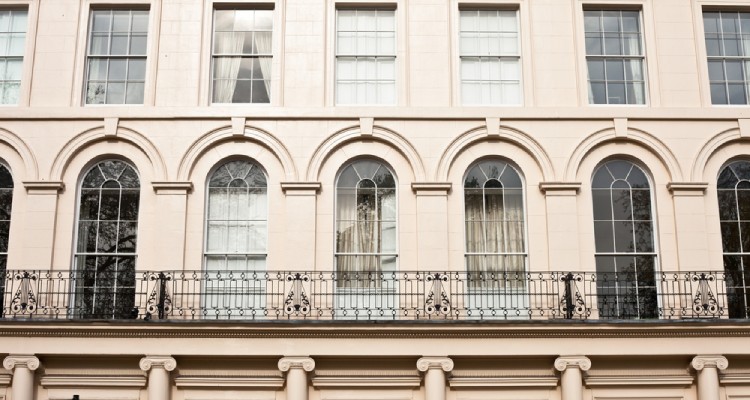
The Nash terraces are the defining architectural feature of this area, and they are unusual in the context of London as a whole. Chester Terrace, the longest of the group, runs for nearly 950 feet and presents a unified stucco façade. Cumberland Terrace is the most ornate, with its central block, Ionic columns, and sculptural pediment. Hanover Terrace architecture is more restrained, with a simpler Ionic portico at each end. All are Grade I listed and sit within the Regent’s Park Conservation Area, meaning external alterations are tightly controlled.
Park Village East and West represent a different architectural profile with smaller-scale Regency villas, many with Italianate or Gothic Revival detailing, set back from the road with front gardens. These were designed for a different buyer than the grand terraces, and that domestic scale is part of their appeal today.
The mansion flat stock around Clarence Gate, Gloucester Place, and the Baker Street approaches dates mainly from the late Victorian and Edwardian periods. These buildings tend to have generous room heights, original cornicing, and solid construction, though the quality of conversion and internal fit-out varies considerably between buildings and between flats within the same building. Buyers should inspect individual units carefully rather than assuming building-level quality is consistent.
Albany Street and the secondary roads to the east are predominantly Victorian terrace conversions, with the usual range of original features depending on how thoroughly the building was modernised. For greater depth on what to look for when assessing period property in this area, including original features, structural considerations, and conversion quality, our Property & Architecture guide covers these points in full.
The tenure picture across the Regent’s Park area is sharply divided by zone. The Nash terraces and the park village streets are predominantly owner-occupied, with a significant proportion of international and non-domiciled owners who may use properties as London pieds-à-terre rather than primary residences. Void periods on these streets are therefore not always an indicator of market weakness; some properties are simply not occupied full-time.
The mansion flats around Clarence Gate and Baker Street have a higher proportion of rental stock. These flats, typically two or three bedrooms with good transport links, appeal to professional renters working in the West End or the City, and landlords in this zone have historically found consistent demand. The Edwardian mansion flat format, with its solid construction and reasonable room sizes, tends to attract longer-term tenants rather than high-turnover lets.
The secondary conversion flat streets to the east of Albany Street have the highest rental concentration in the area, reflecting their more accessible price point and the proximity to University College London, the Wellcome Collection, and other institutional employers in the broader NW1 and WC1 catchment. Landlords buying in this zone should note that rental demand is driven partly by proximity to these employers and institutions, which provides a degree of resilience but also means demand is sensitive to any significant change in those institutions’ footprint.
For landlords assessing gross yields, the secondary streets offer a better yield profile than the prestige addresses, where capital values are very high in relation to achievable rents. The mansion flat zone sits in between, offering a reasonable balance of rental income and capital value for buy-to-let investors.
All that said, the rental or owner-occupier profile is always shifting, so check out our property listings to see what’s available for buyers and tenants.
The most significant recent development within the park itself is the Queen Elizabeth II Garden, a two-acre public garden opened by the Princess Royal on 21 April 2026, built on the site of the former horticultural nursery on the Broad Walk near the Avenue Gardens. The £5 million project, designed by HTA Design, adds a permanent new amenity to the park’s northern interior. For buyers on streets adjacent to the Broad Walk or the park’s inner roads, this represents a genuine improvement to the park’s offer.
Conservation works on York Bridge, one of the early 19th-century bridges within the park, were completed in April 2026. This work addressed structural damage caused by weight and water over time and preserves one of the park’s key pedestrian routes.
The transfer of the tennis court operation to The Royal Parks’ own management team from February 2026, with Benugo taking over the associated café, is a minor but positive indicator of reinvestment in the park’s public-facing facilities.
On the wider infrastructure side, no major transport upgrades directly affecting the Regent’s Park area are currently confirmed in the planning pipeline that would alter the relative standing of specific streets. Baker Street station’s position as a major interchange remains a stable advantage for streets on the western side of the park. Buyers on the northern edge, particularly around Park Village, should note that the nearest Underground access involves a walk to either Camden Town or Great Portland Street, and factor this into their assessment of the location’s convenience.
Having identified the right pocket of Regent’s Park, the next step is to understand what’s actually available there and how current stock compares to what you’ve read here. Contact us to speak with someone who knows these streets in detail, or register as a buyer or tenant to be matched with properties as they come to market.
The Nash terraces on the Outer Circle, including Chester Terrace, Cumberland Terrace, and Hanover Terrace, are the most prestigious addresses, combining Grade I listed architecture with direct park views. For buyers seeking houses, Park Village East and West offer rare detached and semi-detached Regency villas adjacent to the park’s north-eastern edge. The right choice depends on whether you prioritise architectural scale, garden space, transport access, or relative value within the area.
The primary drivers are park-facing aspect, listed status, and architectural quality. A property on the Outer Circle within a Nash terrace occupies a fundamentally different market position from a conversion flat on a secondary road two streets back. Crown Estate leasehold terms, conservation area restrictions, floor level, and natural light also affect pricing significantly within the same building.
Park Village East and West are the clearest example of streets offering genuine quality without the full visibility of the Nash terraces, though they are not inexpensive. For buyers with a tighter budget, conversion flats on Albany Street and the secondary roads east of the park provide the most accessible entry into the NW1 postcode.
Christ Church CE Primary on Redhill Street is among the closest well-regarded state primaries and draws catchment-conscious buyers toward streets south of Marylebone Road. St Marylebone CE School is a partially selective secondary with strong results. Catchment boundaries change annually, so buyers should verify current boundaries directly with Westminster City Council or Camden Council before making location decisions on this basis.
It depends on the street. The prestige Nash terrace addresses carry very high capital values relative to achievable rents, compressing gross yields. The mansion flats around Clarence Gate and Baker Street offer a more balanced yield profile, with consistent demand from professional renters. Secondary conversion flats east of Albany Street typically offer the strongest yields, supported by proximity to UCL and other institutional employers in the broader NW1 catchment.
Begin your journey with a free property valuation.
Get the facts and figures to make informed decisions.
"*" indicates required fields
If you want to know more contact us,
and we’ll be happy to help you.
"*" indicates required fields

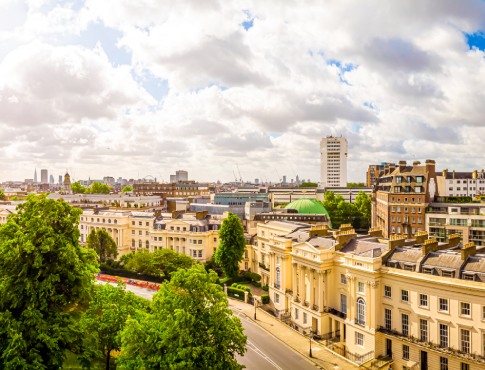
Few London postcodes demand as much from a buyer as Regent's Park. Between Grade I listed Nash Terraces held on Crown Estate leases, cons...
Few London addresses carry quite the same weight as Regent's Park. We're talking 410 acres of Royal parkland, John Nash's iconic white st...
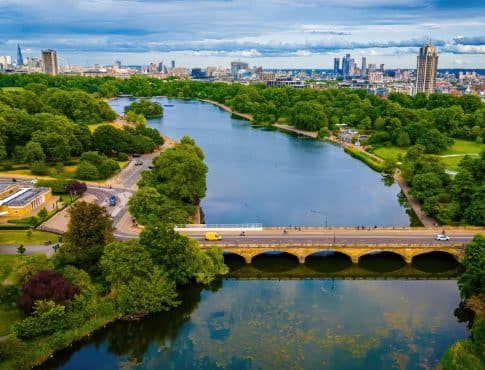
Few London addresses offer 350 acres of Royal Park on the doorstep. But living near Hyde Park is about far more than the obvious green sp...


