Looking to Sell or Let?
Begin your journey with a free property valuation.
Get the facts and figures to make informed decisions.

Property Valuation
"*" indicates required fields

There are few parts of the world that boast the standard of property architecture that Regent’s Park is famous for.
The Nash Terraces that face the park are among the most architecturally significant residential buildings in London, and the streets immediately behind them contain some of the capital’s most intact Victorian and Edwardian housing stock. However, the price gap between a well-positioned period flat and a poorly converted one can vary massively, so understanding the stock before you view saves time and money.
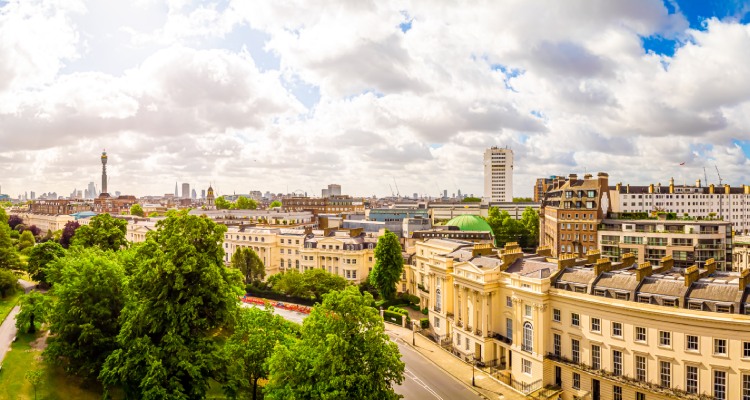
The housing around Regent’s Park spans stucco-fronted Regency grandeur on the park’s edge, dense Victorian terracing in Primrose Hill and the streets north of Marylebone Road, Edwardian mansion blocks along the main roads, and a modest but growing number of contemporary conversions and new builds. What ties these together is consistent demand and limited supply.
The park itself is a Grade I listed landscape, and the surrounding conservation designations mean that significant alteration or new development is tightly controlled. For buyers, that restriction is both a protection and a constraint.
The area supports a wide range of property types, from Grade I listed Regency terraces to purpose-built mansion blocks and a small number of modern conversions. The table below gives a reference to price ranges reflecting general market positioning rather than current asking prices, which shift with conditions.
| Property Type | Typical Period | Typical Tenure |
|---|---|---|
| Nash Terrace townhouse | 1812–1830 | Leasehold (Crown Estate) |
| Converted period flat (terrace/semi) | 1840–1910 | Leasehold |
| Victorian terrace (Primrose Hill/St John’s Wood fringe) | 1850–1900 | Freehold |
| Edwardian mansion block flat | 1900–1914 | Leasehold |
| Purpose-built post-war flat | 1950s–1970s | Leasehold |
| Contemporary conversion/new build | 2000s–present | Leasehold/Freehold |
The defining buildings of the Regent’s Park estate are the Regency terraces designed by John Nash from around 1812 onwards: Cumberland Terrace, Chester Terrace, Cornwall Terrace, and their counterparts along the Outer Circle. These are not typical period conversions. Most are held on long leases from the Crown Estate, which manages the freehold across much of the park edge. Buyers should check lease length carefully, as some Crown Estate leases have been extended but others have not.
The buildings are Grade I listed, which means any internal or external alteration requires listed building consent. Ceiling heights are exceptional, original cornicing is frequently intact, and the stucco elevations, while striking, carry significant maintenance obligations.
The streets of Primrose Hill, the area around Fitzroy Road and Chalcot Square, and parts of St John’s Wood contain dense runs of Victorian terraced and semi-detached houses, mostly built between 1850 and 1890. These are typically two- to four-storey properties in London stock brick with slate roofs, bay fronts at ground and first floor, and the original timber sash windows surviving in varying degrees of preservation.
Freehold ownership is more common here than on the park edge, making these among the more straightforward purchases in the area from a tenure perspective.
Along Avenue Road, Park Road, and the roads connecting the park to St John’s Wood, red-brick Edwardian mansion blocks provide a significant share of the flat stock. These buildings, typically six to eight storeys with communal lifts and portered entrances, were purpose-built as high-quality flats and many retain their original proportions with wide entrance halls, large reception rooms, and service staircases.
Service charges can be substantial, particularly where buildings retain porterage and have ongoing maintenance programmes.
A smaller number of post-war blocks sit within the wider area, particularly towards the Euston Road end and within some of the internal estate roads. These are generally leasehold, with shorter remaining lease terms in some cases. Contemporary conversions of former commercial or institutional buildings have added a modest number of units over the past two decades, though planning restrictions limit the volume significantly.
The Regent’s Park area is one of the most heavily designated in London, which is a significant factor for any buyer planning alterations.
Regent’s Park Conservation Area (City of Westminster): covers the park edge and the Nash Terrace estate. Residents face tight restrictions on external alterations, replacement windows, roof changes, and new extensions. Permitted development rights are substantially reduced. The conservation area appraisal is held by Westminster City Council.
Primrose Hill Conservation Area (London Borough of Camden): covers the residential streets of Primrose Hill, including Fitzroy Road, Chalcot Square, and Chalcot Crescent. External changes to buildings, including window replacement, require prior consent. The area’s character, including its painted stucco and brick Victorian terraces, is protected.
St John’s Wood Conservation Area (City of Westminster): covers the detached and semi-detached Victorian villas and the mansion block streets to the west of the park. Permitted development limits apply; extensions and alterations are subject to council approval.
Marylebone Conservation Area (City of Westminster): covers the southern approaches, including the Georgian and early Victorian streets between Regent’s Park and Oxford Street.
The Nash Terraces on the Outer Circle are Grade I listed, placing them in the top tier of statutory protection. Grade I listing means that virtually any alteration to the external or internal fabric requires listed building consent from the local planning authority, and unauthorised works can result in enforcement action and criminal prosecution. Several individual buildings within the wider area hold Grade II* and Grade II listings, so buyers should check the Historic England register for any specific property before proceeding.
The park itself is designated a Grade I listed landscape by Historic England, which reinforces the protection of its setting and limits any development on or adjacent to its boundaries.
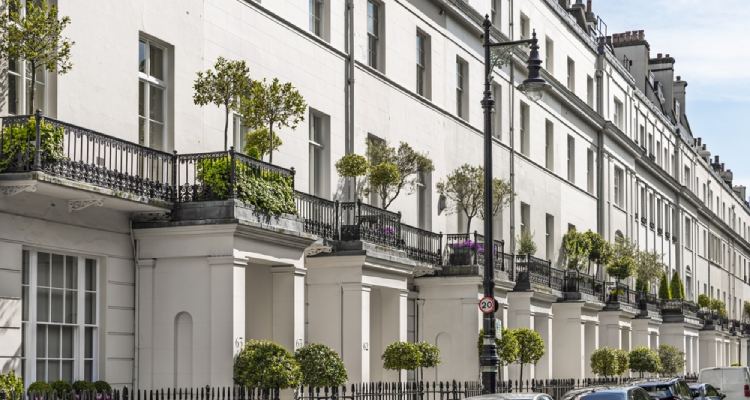
The Nash Terraces are the definitive example of this period in London. Internal layouts often reflect the original division between principal and service floors, and buyers should check how conversions have handled this split. Where basement conversions have been carried out, drainage and waterproofing are important survey considerations.
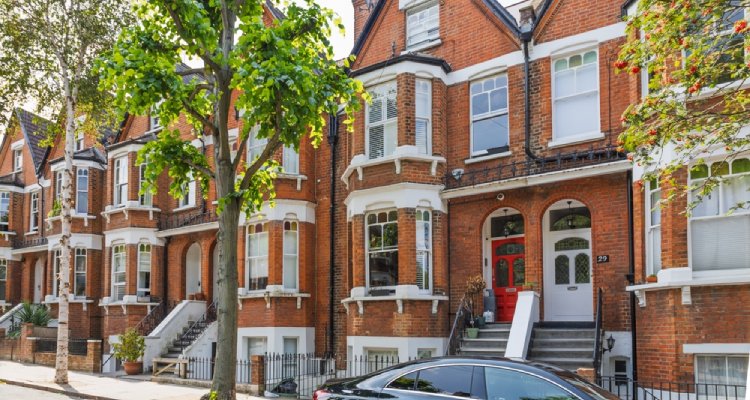
The Victorian terraces of Primrose Hill are particularly well preserved, partly because the conservation designation has limited the worst alterations. Buyers should check whether original sash windows remain, as replacement with uPVC or aluminium is not permitted in most conservation areas here and any non-compliant windows may require reinstatement at the buyer’s cost.
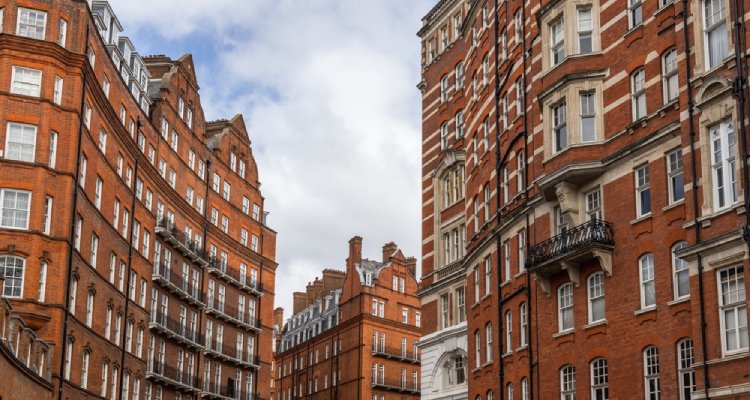
Buyers of mansion block flats should obtain a copy of the most recent service charge accounts and ask specifically about planned major works.
New development within the Regent’s Park area is tightly constrained by conservation designations and the Crown Estate’s control over the park edge. Significant new residential schemes of the kind seen in neighbouring Marylebone or King’s Cross have not been replicated here.
The most notable recent activity has been the conversion of former institutional and commercial buildings to residential use, primarily producing leasehold flats. These schemes tend to be small in unit count, with high specification finishes targeted at the upper end of the market.
The Crown Estate’s ongoing stewardship of the Nash Terrace estate has included periodic refurbishment of common parts and structural fabric, but this does not add to the housing stock. Buyers interested in newly built or recently converted property in the area should expect limited choice and should register early with agents in the area, as units in well-positioned schemes rarely reach the open market in volume.
There are no large-scale residential planning approvals currently in the public domain for land within the immediate Regent’s Park estate boundary, consistent with the area’s Grade I landscape designation and the general policy position of both Westminster and Camden councils towards development in and around the park.
Outside space in the Regent’s Park area varies considerably by property type, and buyers should go in with clear expectations.
The Victorian terraces of Primrose Hill typically have a rear garden of between 30 and 60 feet, accessed from the back of the house. Side returns are common in the wider terrace format and are frequently the subject of infill extensions, though these require planning consent within conservation areas. Front gardens are generally small, often reduced to a short path between the pavement and the front door, with original iron railings in many cases.
The Nash Terrace properties on the park edge usually offer less outside space. Private gardens are limited or absent for most flats within these conversions, but residents benefit from direct access to the park itself, which at 410 acres provides a scale of green space that no private garden could replicate. Some ground-floor and garden-level flats within the terrace conversions retain small private terraces.
Edwardian mansion block flats rarely have private outdoor space beyond a balcony, where one exists. Communal gardens are present in some blocks and are a notable premium feature where they occur. Buyers of mansion block flats should check whether communal gardens are maintained as part of the service charge or managed separately.
Off-street parking is limited across most of the area. The streets of Primrose Hill are predominantly residents’ permit zones, and many period properties have no off-street provision. Some of the larger Nash Terrace properties retain garaging, but this is the exception. Buyers who require parking should check these details early on.
Buyers in the Regent’s Park are advised to do their homework before viewing, particularly where listed buildings, Crown Estate tenure, or conservation area restrictions apply.
Plaza Estates has been active in Central London’s period property market for decades and can help you navigate the specifics of any purchase here. Register as a buyer to be matched with relevant stock as it comes to market, search property directly, or contact us to discuss what you’re looking for in more detail. If you’re considering a buy-to-let purchase in the area, our landlord services page sets out how we can support you once the purchase completes.
The area spans Regency townhouses and converted flats on the park’s Outer Circle, Victorian terraced houses in Primrose Hill, Edwardian mansion block flats along the main roads, and a small number of post-war and contemporary conversions. Supply is consistently tight across all types, and well-positioned stock rarely stays on the market for long.
It depends heavily on the property type. Nash Terrace properties on the park edge are almost exclusively leasehold, with the Crown Estate holding the freehold. Victorian terraced houses in Primrose Hill are more commonly freehold, while mansion block flats are leasehold as a rule. Buyers should verify tenure and, for leaseholds, check the remaining lease term carefully before proceeding.
Yes. Several conservation areas cover the estate and surrounding streets, including designations in both Westminster and Camden. Conservation area status significantly reduces permitted development rights: external alterations, window replacements, and extensions typically require prior planning consent. Buyers planning any works should seek pre-application advice from the relevant local planning authority before committing.
Key issues include damp in solid wall construction, stucco condition on Regency properties, basement waterproofing where lower floors have been converted, roof and chimney condition, and older electrical or plumbing systems. For leasehold properties, lease length and service charge history are equally important. A full RICS Level 3 Building Survey is essential for any pre-war property in this area.
New build supply in the immediate area is very limited. Conservation designations, Crown Estate ownership of the park edge, and the planning policies of both Westminster and Camden councils all restrict new residential development significantly. Small conversion schemes do come to market periodically, but buyers looking for new build property in volume will find more options in neighbouring Marylebone or King’s Cross.
Begin your journey with a free property valuation.
Get the facts and figures to make informed decisions.
"*" indicates required fields
If you want to know more contact us,
and we’ll be happy to help you.
"*" indicates required fields

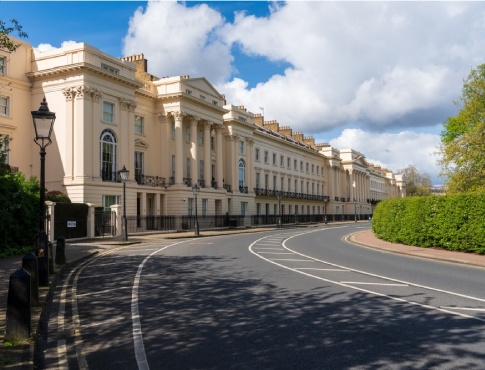
From the Grade I listed Nash terraces of the Outer Circle to the overlooked Regency villas of Park Village East and West, this guide brea...
Few London addresses carry quite the same weight as Regent's Park. We're talking 410 acres of Royal parkland, John Nash's iconic white st...
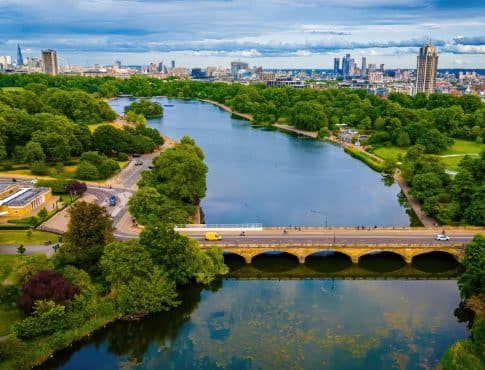
Few London addresses offer 350 acres of Royal Park on the doorstep. But living near Hyde Park is about far more than the obvious green sp...


