Looking to Sell or Let?
Begin your journey with a free property valuation.
Get the facts and figures to make informed decisions.

Property Valuation
"*" indicates required fields

One of the key attractions to living near Hyde Park is having the famous 350-acre park on the doorstep. For buyers and tenants weighing up the area around Hyde Park, that fact alone shapes everything: the light, the quiet, the sense of space, and the price tag. What makes the neighbourhood worth examining closely is how much it offers beyond the obvious, and how sharply it divides into distinct pockets with different price points, characters, and practical realities.
Hyde Park sits at the heart of central London, bordered to the north by Bayswater Road, to the south by Knightsbridge, to the east by Park Lane, and to the west by Kensington Gardens and the Royal Borough of Kensington and Chelsea.
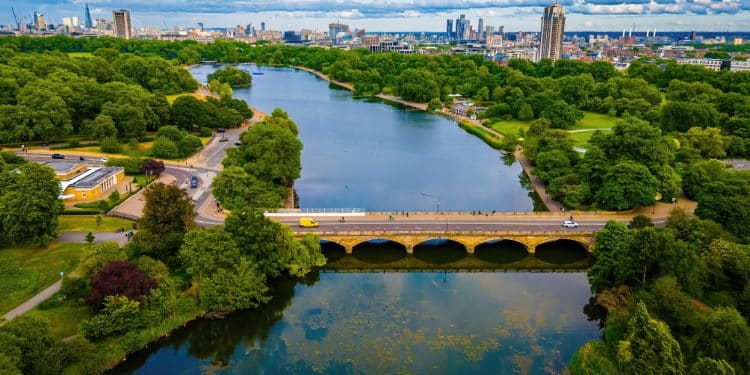
The surrounding residential streets draw a wide range of buyers including those seeking a prestigious London base, international buyers who want the convenience of central London with the feel of space, and investors who understand that proximity to a Grade I-listed Royal Park supports long-term values that few other London locations can match.
Bayswater to the north and Knightsbridge to the south vary significantly in terms of price, stock, and social character. Understanding which pocket suits you is the real starting point, and our guides on Key Streets & Locations and Property & Architecture go into that detail.
The park itself is the most obvious answer, but it deserves more than a passing mention. At 350 acres, Hyde Park is one of the largest urban parks in the world, offering a Serpentine lake for wild swimming (home to the oldest swimming club in Britain), horse riding on Rotten Row, tennis courts, a boating lake, and the famous Speakers’ Corner. For anyone who values outdoor space but doesn’t want to leave zone 1, there is simply no equivalent.
Beyond the park, the area benefits from a concentration of cultural assets including the Serpentine Gallery, which sits within the park itself. The Royal Albert Hall, the Victoria and Albert Museum, and the Natural History Museum are all within walking distance to the west. The West End is similarly close to the east.
The transport options are exceptional around Hyde Park. Multiple Underground lines serve the area, and key central London destinations are reachable in under fifteen minutes. South Carriage Drive, which runs through the southern edge of the park, is currently closed to weekday motor traffic following a trial scheme agreed with Transport for London, making the park easier and safer to cross on foot or by bike.
The area also hosts some of London’s most recognisable annual events. Hyde Park’s BST (British Summer Time) festival brings world-class acts to a 65,000-capacity outdoor venue each summer, with performers including Garth Brooks, Mumford & Sons, and Lewis Capaldi taking to the stage in 2026.
Hyde Park Winter Wonderland, running from November to New Year, drew approximately 2.5 million visitors during its 2025 edition and has become one of the largest Christmas events in the UK. These events are a part of local life: worth knowing about if you’re buying nearby, since they bring temporary noise and crowds to the surrounding streets.
| Buyer or tenant type | Best suited because | Potential drawback |
|---|---|---|
| International buyers and investors | Prime central London location, strong long-term capital preservation, globally recognised address | Premium pricing across all property types; stamp duty surcharges apply to overseas buyers |
| Young professionals | Excellent transport, cultural venues, restaurants, and walkable access to the West End and City | Limited affordable flat stock; rental costs are among the highest in London |
| Families | Large green space, good schools within reach, spacious lateral apartments and townhouses | Few truly family-sized properties at accessible price points; limited school places in immediate vicinity |
| Downsizers | High-quality apartment stock, walkable amenities, low-maintenance living | Noise and event activity near the park perimeter; service charges on luxury blocks can be significant |
| Buy-to-let landlords | Consistent demand from international tenants, corporate lets, and high-earning professionals | High acquisition costs compress yields; the area is better suited to capital growth than income returns |
The area around Hyde Park is one of the most internationally oriented residential locations in London. It suits buyers and tenants who place a high value on prestige, green space, and central access, and who are comfortable with the cost of entry. Buyers looking for strong rental yield rather than capital appreciation will find it more difficult to achieve the returns they are looking for but those focused on long-term value retention can find good investment opportunities.
The streets around Hyde Park sit firmly in prime central London territory, and prices reflect that. The property stock is dominated by large Victorian and Edwardian terraces, stucco-fronted mansion blocks, and purpose-built luxury apartment developments. Lateral conversions and maisonettes are common in the grand period houses that line the park-facing streets.
Prime central London property values in this area have historically placed it among the most expensive residential markets in the country. Flats and apartments account for the majority of transactions in the immediate Hyde Park vicinity, with a smaller number of terraced and semi-detached houses completing at significantly higher price points. The luxury apartments at One Hyde Park command some of the highest global sold prices, with a recent transaction of £160 million for a duplex penthouse.
For a detailed breakdown of property types, architectural periods, and street-level price variation, see our companion Property & Architecture guide.
The area around Hyde Park is served by multiple Underground lines and is exceptionally well connected to central and wider London. South Carriage Drive through the park’s southern edge is currently closed to weekday motor traffic, making cycling and walking across the park more practical than in previous years.
| Mode | Route / Line | Approx. journey time |
|---|---|---|
| Underground | Central line (Lancaster Gate, Marble Arch) | Bond Street: 3 min; Liverpool Street: 15 min |
| Underground | District & Circle lines (High Street Kensington, Paddington) | Victoria: 10 min; Paddington: 5 min |
| Underground | Piccadilly line (Hyde Park Corner, Knightsbridge) | Heathrow Terminal 5: approx. 40 min |
| Underground | Jubilee line (Bond Street, Baker Street) | Canary Wharf: 20 min |
| Bus | Multiple routes along Bayswater Road, Park Lane, Knightsbridge | Frequent services across central London |
| Road | A4, A40, A3212 | Easy access to M4 (west), City (east) |
The Elizabeth line at Paddington, a short distance north, adds a further direct connection to the City, Canary Wharf, and Heathrow, with journey times significantly faster than the Piccadilly line. No major new transport infrastructure is currently planned for the immediate Hyde Park area, though the ongoing TfL cycle lane improvements on Park Lane are expected to make the eastern park boundary more accessible on two wheels.
The immediate Hyde Park area sits within the City of Westminster for schools in the north and east, and the Royal Borough of Kensington and Chelsea to the west. Provision is relatively limited in the park’s immediate vicinity, with most families choosing schools in the surrounding neighbourhoods of Bayswater, Knightsbridge, Kensington, and Mayfair.
| School | Phase | Ofsted Rating | Inspection Date |
|---|---|---|---|
| St James’s CE Primary School, Westminster | Primary | Strong Standard (new Ofsted scheme) | April 2026 (Ofsted) |
| Connaught House School | Independent Primary | All Standards Met (ISI) | Nov 2025 (ISI) |
| Fox Primary School, Kensington | Primary | Outstanding | Oct 2023 (Ofsted) |
| The Lycée Français Charles de Gaulle | All-through (French curriculum) | Good | Oct 2024 |
Independent school provision is strong across the wider area, with several well-regarded prep and senior schools within a short distance, including Wetherby School in Kensington and Hill House School in Knightsbridge. For families, the area’s relative lack of state school places in the immediate vicinity means early planning is essential. Those with children in independent education will find the choice broad.
The retail offer around Hyde Park is shaped by the contrasting characters of its surrounding streets. Knightsbridge to the south is home to Harrods and Harvey Nichols, two of London’s most prominent luxury department stores, alongside a concentration of high-end boutiques on Sloane Street and Brompton Road. Bayswater to the north offers a more everyday mix, with Queensway serving as a functional local high street with supermarkets, cafés, and independent shops.
Westfield London in Shepherd’s Bush is accessible within fifteen minutes and provides a large-scale retail and leisure offer. For day-to-day food shopping, a Waitrose operates near Gloucester Road, and a Marks & Spencer Food Hall is located on Kensington High Street. The Portobello Road market in nearby Notting Hill, one of London’s most established street markets, is within easy reach for those based in the western part of the area.
The food and drink scene around Hyde Park reflects the area’s internationalism. Knightsbridge is home to a cluster of well-regarded restaurants, including Zuma on Raphael Street, which has traded continuously as one of London’s most established Japanese restaurants since 2002, and Amaya on Motcomb Street, known for its Indian grill menu.
Within the park itself, the Serpentine Bar & Kitchen operates as a café and restaurant overlooking the lake, and is a well-used stop for those spending time in the park. The Lido Café at the Serpentine Lido is open seasonally.
Bayswater’s restaurant scene, concentrated around Queensway and Westbourne Grove, offers a more eclectic and affordable range, with a particularly strong Middle Eastern and Chinese presence that has been a feature of the area for decades.
GP provision in the area is served by a number of practices within Westminster and the Royal Borough of Kensington and Chelsea, including surgeries accessible via the NHS website. The area is well covered for a central London location, though NHS appointment availability can reflect the pressures common across inner London practices.
The nearest major A&E departments are at St Mary’s Hospital in Paddington (approximately one mile north) and Chelsea and Westminster Hospital on Fulham Road (approximately two miles south-west). Both are major NHS teaching hospitals. St Mary’s, part of Imperial College Healthcare NHS Trust, is one of London’s most prominent trauma and emergency centres. For minor injuries and urgent care, a number of walk-in and urgent treatment centres operate across Westminster and the Royal Borough of Kensington and Chelsea, details of which are available via NHS.uk.
Hyde Park itself is the defining green space, and at 350 acres it provides a range of environments within a single park. The Serpentine and Long Water offer wild swimming through the Serpentine Swimming Club (the oldest in Britain), rowing and pedalo hire, and a pleasant lakeside walk. Rotten Row remains one of London’s few dedicated horse-riding routes. The park’s open lawns accommodate sunbathing, informal sport, and large-scale events without feeling overcrowded on most days.
Kensington Gardens adjoins Hyde Park to the west and is managed separately by the Royal Parks. Together the two parks form a continuous green corridor of over 600 acres, running from Bayswater Road south to Kensington Gore. The Italian Garden at the northern end of the Long Water and the Albert Memorial are both notable features within Kensington Gardens.
Green Park and St James’s Park are accessible on foot or by Underground to the east, extending the chain of Royal Parks across central London. For residents with dogs, Hyde Park is fully accessible with dogs on leads, and large areas of the park permit off-lead exercise.
Living near Hyde Park places you in one of London’s most expensive residential zones. Council tax is levied by the City of Westminster for properties north of the park and by the Royal Borough of Kensington and Chelsea to the west and south.
| Cost item | Indicative figure or band |
|---|---|
| Council tax (Westminster, Band D) | £1,047.85 per year (2026/27) |
| Council tax (RBKC, Band D) | £1,643.44 per year (2026/27) |
| Average monthly rent, one-bedroom flat | £2,500–£3,500 pcm |
| Average monthly rent, two-bedroom flat | £3,500–£6,000+ pcm |
Westminster’s council tax rate is notably low relative to other London boroughs, a long-standing feature of the borough’s finances. Day-to-day costs beyond housing reflect the area’s central location: parking is expensive, but many residents find a car unnecessary given the transport links. Proximity to the park reduces reliance on paid leisure facilities for those who use it regularly.
Hyde Park’s identity as “The People’s Park” is more than a nickname. The park has hosted the UK’s first Pride march, suffragette rallies, Nelson Mandela’s address to Londoners, and free Rolling Stones and Queen concerts that drew hundreds of thousands. That tradition of public gathering continues in the modern era with BST Hyde Park bringing 65,000 people per event each summer, and Winter Wonderland welcomes approximately 2.5 million visitors over six weeks each winter.
For residents, this cuts both ways. The park is animated and culturally significant, but the event calendar brings noise and significant foot traffic to the surrounding streets at predictable points in the year. Buyers on the park’s southern and northern perimeters should factor this in.
Away from the park, the residential streets around Hyde Park sustain a notably international character. Bayswater in particular has long been home to communities from across the Middle East, Greece, and South Asia, which is reflected in its restaurant and shop offerings.
For buyers and tenants who prioritise central location, green space, and strong transport links, the area around Hyde Park is one of London’s most practical as well as prestigious addresses. The trade-off is cost: property prices and rents are among the highest in the capital, and the area is better suited to those who can absorb that rather than those seeking value relative to nearby alternatives.
The area sits firmly in prime central London territory, with flats accounting for the majority of transactions. Prices vary significantly depending on whether you’re looking at the Bayswater side (W2) or Knightsbridge (SW1X), with the latter commanding a premium.
Yes, Hyde Park has excellent transport links. Multiple Underground lines serve the area, including the Central, District, Circle, Piccadilly, and Jubilee lines. Paddington station, a short walk north, provides Elizabeth line access to the City, Canary Wharf, and Heathrow. Most of central London is reachable within fifteen minutes.
It is one of the most expensive parts of London. Rental costs for a one-bedroom flat typically start above £2,500 pcm in the immediate park vicinity. Council tax in Westminster is relatively low compared to other inner London boroughs, but all other costs reflect the central location.
The park itself is an outstanding family asset, offering space, activities, and outdoor freedom that’s rare in zone 1. Families typically look to Bayswater, Kensington, or Westminster more broadly for both state and independent options. Housing stock large enough for families exists but commands a significant premium.
Demand from high-earning professionals, corporate tenants, and international renters is consistent, which limits void periods. However, high acquisition costs mean gross yields are typically low by London standards. The area is more compelling as a long-term capital preservation play than an income-generating one. Landlords should factor in the costs associated with service charges on luxury apartment blocks, which can be substantial.
It depends on exactly where you are. Properties on the northern and southern park perimeters are closest to the BST Hyde Park concert venue and the Winter Wonderland site. These events are well-managed but do bring noise and crowds. Streets set back from the park boundary are noticeably quieter during event periods.
Whether you’re drawn by the park, the transport links, or the long-term investment opportunities, Plaza Estates has been working in prime central London for many years and can help you navigate the specifics. To find out more about the Hyde Park property market, contact us. If you’re ready to begin your property search, you can find out more about our buying services or explore what renting with Plaza Estates involves.
Begin your journey with a free property valuation.
Get the facts and figures to make informed decisions.
"*" indicates required fields
If you want to know more contact us,
and we’ll be happy to help you.
"*" indicates required fields

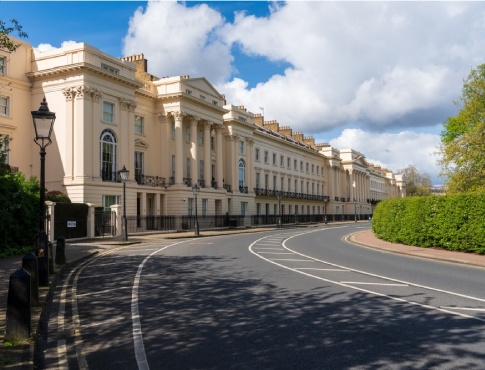
From the Grade I listed Nash terraces of the Outer Circle to the overlooked Regency villas of Park Village East and West, this guide brea...
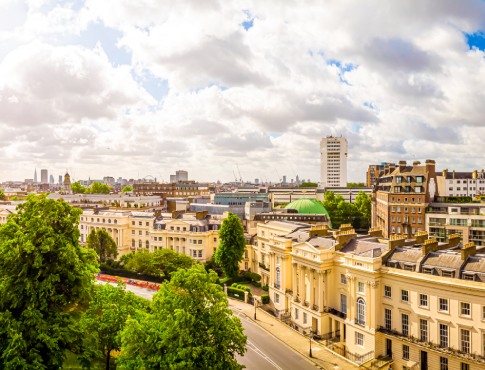
Few London postcodes demand as much from a buyer as Regent's Park. Between Grade I listed Nash Terraces held on Crown Estate leases, cons...
Few London addresses carry quite the same weight as Regent's Park. We're talking 410 acres of Royal parkland, John Nash's iconic white st...


